1
/
of
1
Ships from: The Little Red Farmhouse
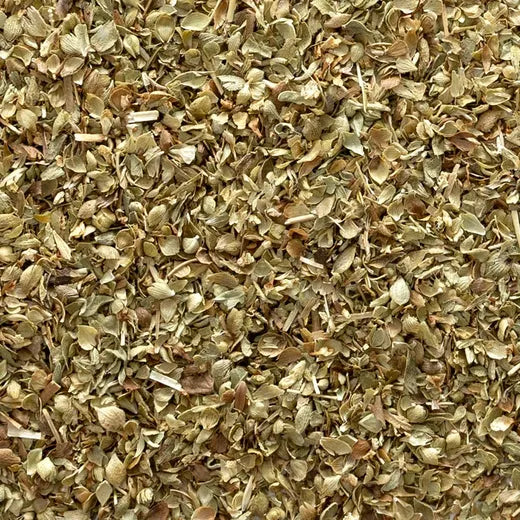
Oregano, Cut and Sifted Dried Leaves (herbs by weight)
Oregano, Cut and Sifted Dried Leaves (herbs by weight)
Regular price
$2.00
Regular price
Sale price
$2.00
Shipping calculated at checkout.
In stock
Quantity
Couldn't load pickup availability
Oregano, Cut and Sifted Dried Leaves
Sold by and ships from Little Red Farmhouse in Lewis County, Washington.
Sold by weight. Approximately 0.69 cups per 1 ounce.
Produced or packaged in a facility which has not been government-approved for food production.
- Buy 1 ounce (~0.69 cup) for $3.00 ($3.00 per ounce)
- Buy 2 ounces (~1.38 cups) and save $0.30 (5%) ($2.85 per ounce)
- Buy 4 ounces (~2.75 cups) and save $1.20 (10%) ($2.70 per ounce)
- Buy 8 ounces (~5.5 cups) and save $6.00 (25%) ($2.25 per ounce)
- Buy 16 ounces (~11 cups) and save $24.00 (50%) ($1.50 per ounce)
Key Characteristics
- Origin: Common oregano is a perennial herb native to the Mediterranean region, Europe, and parts of Asia. It has been used for centuries in culinary and traditional medicine and has naturalized in other parts of the world. It is sometimes referred to as wild marjoram.
- Patent Status: As a widely naturalized species and older cultivated forms, Origanum vulgare is not patented. Specific, more recently developed cultivars for enhanced traits might have plant variety protection in some regions, but the base species is not patentable.
- Leaf Production: Common oregano is primarily grown for its aromatic leaves, which have a warm, pungent, and slightly peppery flavor. The leaves are typically small, oval to rounded, and can range in color from gray-green to bright green, depending on the variety and growing conditions. They are covered in tiny glandular hairs that contain the essential oils responsible for its aroma and flavor.
- Growth Habit: It is a bushy, herbaceous perennial that typically grows to a height of 1-3 feet (30-90 cm) and can spread to 1-2 feet (30-60 cm) wide. It has square stems, characteristic of the mint family (Lamiaceae). The plant can be somewhat sprawling.
- Flowering Time: Common oregano typically flowers from mid-summer to early fall, producing clusters of small, tubular flowers that are usually pinkish-purple or white. The flowers are attractive to pollinators. Pinching off flowers can sometimes encourage more leaf production and maintain a tidier appearance.
- Hardiness: Common oregano is generally hardy in USDA Zones 4 through 9 (and sometimes Zone 3 with protection). It is a perennial in these zones, with its root system surviving the winter and new growth emerging in the spring. It prefers well-drained conditions, especially in winter.
- Pollination: The flowers are primarily pollinated by bees, butterflies, and other insects.
-
Growing Conditions:
- Sunlight: Requires full sun (at least 6-8 hours of direct sunlight daily) for the best flavor and growth. Insufficient sunlight can lead to leggy growth and reduced essential oil content.
- Soil: Thrives in well-drained soil. It is adaptable to a range of soil types, including poor, rocky, or sandy soils, but prefers a slightly alkaline to neutral pH (6.0-8.0). Good drainage is crucial to prevent root rot.
- Watering: Once established, common oregano is relatively drought-tolerant. Water moderately, allowing the soil to dry out slightly between waterings. Overwatering can be detrimental.
- Fertilizing: Generally does not require heavy fertilization. In fact, overly rich soil can sometimes diminish the intensity of its flavor. A light application of compost in the spring is usually sufficient. Avoid high-nitrogen fertilizers.
- Spacing: Space plants 12-18 inches (30-45 cm) apart to allow for air circulation and spreading. For container growing, ensure good drainage.
- Pruning: Regular harvesting of the leaves helps to keep the plant compact and bushy. Shear or prune back the plants regularly before flowering to encourage the growth of new, flavorful leaves and maintain a tidy shape. You can cut back stems several inches above the ground.
- Propagation: Easily propagated by seeds, cuttings, division, or layering in spring or fall. Seed-grown plants may vary in flavor and aroma.
-
Uses: Common oregano is a widely used culinary herb, particularly in Mediterranean and Latin American cuisines:
- Culinary: Essential for flavoring pizza, pasta sauces, tomato dishes, meats, poultry, fish, vegetables, soups, stews, and dressings. It pairs well with garlic, onions, basil, and other herbs.
- Medicinal: Traditionally used for its antiseptic, antibacterial, and antioxidant properties. Oregano oil, extracted from the leaves and flowers, is used for various health purposes. (Note: Consult with a healthcare professional for medicinal use).
- Aromatic: The fragrant leaves can be used in potpourri.
- Gardening: Attracts beneficial insects and can be a useful companion plant. Some varieties can be used as ground cover.
- Wildlife Value: The flowers are attractive to bees, butterflies, and other pollinators, contributing to garden biodiversity.
- Ornamental Value: With its attractive foliage and flowers, oregano can be a pleasant addition to herb gardens, rock gardens, and containers. Some cultivars are grown specifically for their ornamental foliage (e.g., golden oregano).
- Cultivars: Numerous cultivars of *Origanum vulgare* exist, offering variations in flavor (e.g., Greek oregano, Italian oregano), leaf color (e.g., 'Aureum' - golden), and growth habit.
Share